Community
Weslaco celebrates Arbor Day with tribute to Major Omar Alonzo Adame
By Marcus Delgado
Advertisement · Why this ad?
Marcus holds a degree in Sociology from the University of Houston and has spent over eight years reporting on community issues for various Texas publications. His experience includes covering social justice movements and local initiatives aimed at improving quality of life.
More from Marcus →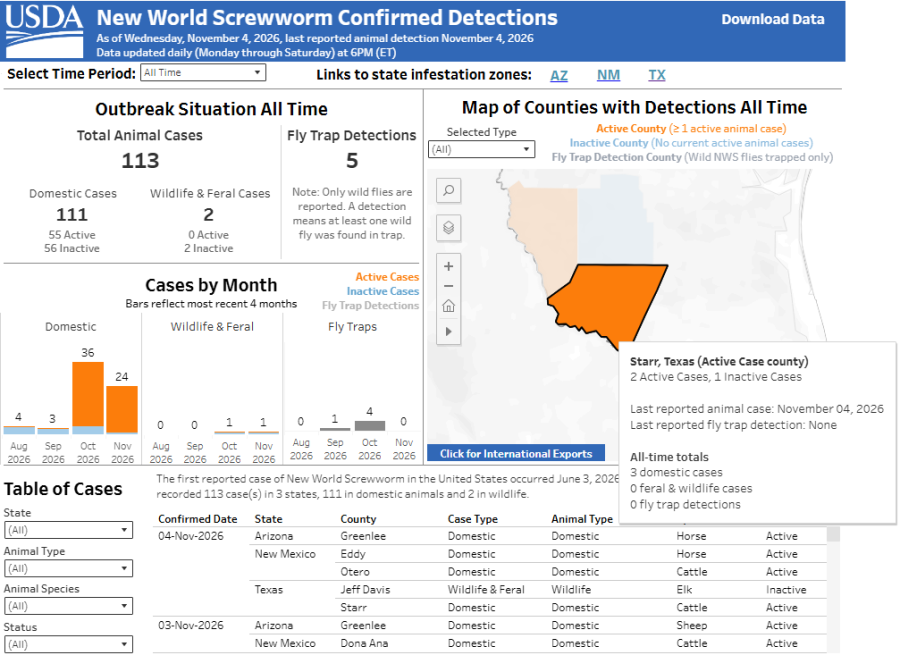
On a quiet morning in McAllen, a local family’s routine walk took a startling turn when their beloved Labrador, Max, began showing unusual signs—persistent scratching and a suspicious wound. What started as a typical day quickly became a cause for concern after a visit to the veterinarian revealed a rare and troubling diagnosis: the first confirmed case of dog screwworm in the Rio Grande Valley. This unsettling news underscores the growing threat of this parasitic pest, which has now made its way into South Texas, raising alarms among pet owners and health officials alike.
The U.S. Department of Agriculture announced Monday that an active case of New World Screwworm had been detected in a dog in Starr County, marking a significant development for the region’s animal health. The screwworm, a parasitic fly larva, is notorious for infesting warm-blooded animals, causing severe tissue destruction if left untreated. This case in Starr County is the first dog case reported in deep South Texas, signaling a potential expansion of the pest’s territory into the Rio Grande Valley—a region known for its rich agricultural and community ties.
The discovery was made after a local veterinarian, Dr. Luis Ramirez, identified symptoms consistent with screwworm infestation in a family pet. Dr. Ramirez, who has been practicing in Starr County for over 15 years, noted that the dog, a five-year-old Labrador named Max, had been acting unusually lethargic and scratching excessively. Upon examination, he found a deep, ulcerative wound that was suspiciously foul-smelling. Recognizing the signs, Dr. Ramirez promptly contacted the USDA, leading to the confirmation of the case.
The incident has sent ripples through the community. Max’s owner, Maria Gonzales, a mother of three who lives just outside of Rio Grande City, expressed her shock. “We’ve always taken good care of Max, but I never imagined something like this could happen here,” she said. “It’s scary to think this pest is now in our area, but I’m grateful for the quick response from our vet and the authorities.”
The USDA’s Animal and Plant Health Inspection Service (APHIS) has increased surveillance efforts across the border region, working closely with local authorities to prevent further spread. The case has also prompted local clinics and animal shelters to heighten their awareness and encourage pet owners to check their animals regularly for wounds or signs of distress, especially during the warmer months when these pests are most active.
The New World Screwworm, native to Central and South America, has historically been a threat to livestock and wildlife, but recent climate changes and global trade have facilitated its movement northward. The fly’s larvae feed on living tissue, creating open wounds that can become infected or lead to death if untreated. The USDA notes that the screwworm is highly contagious among animals, especially in warm, humid environments like South Texas.
According to Dr. Maria Lopez, a veterinarian specializing in exotic pests at the Texas A&M AgriLife Extension Service, early detection is crucial. “The key is awareness,” she says. “Pet owners should regularly check their animals for unusual wounds or signs of distress, especially during warmer months when these pests are most active.” The agency is urging residents to report any suspicious cases of infestations in animals immediately, helping to contain the spread before it reaches livestock or humans.
Beyond individual cases, local farmers are also on high alert. Many of the region’s cattle ranches and dairy farms, which form the backbone of the local economy, are vulnerable to outbreaks. The possibility of screwworm infestations spreading to livestock could have devastating economic consequences, affecting meat and dairy production, and leading to increased costs for farmers who may need to implement additional biosecurity measures.
The news has sent ripples through the local community, where families, farmers, and pet owners are now more alert than ever. Many residents are recalling the importance of strong, committed households and the role of authentic faith in overcoming challenges. “We’ve seen how unity and faith can help us through tough times,” said Maria Sanchez, a McAllen resident and mother of three. “Now, we need to stay vigilant and protect our pets and farms.”
Local officials and veterinary clinics are collaborating to distribute informational materials and offer free screenings for animals. The McAllen Chamber of Commerce has also issued a statement emphasizing the importance of community cooperation in preventing the spread of the screwworm. As the region faces this new threat, residents are reminded that strong families and faith-based communities are the backbone of resilience, capable of facing and overcoming adversity together.
Community leaders are also organizing informational sessions at local churches, schools, and community centers to educate residents about the signs of screwworm infestation, proper wound care, and preventive measures. These efforts aim to empower pet owners and farmers to take proactive steps in safeguarding their animals and livelihoods. Faith-based organizations, such as the local Catholic and Protestant churches, are mobilizing volunteers to assist with outreach and education, emphasizing that spiritual strength and community support are vital in times of crisis.
Looking ahead, authorities plan to intensify surveillance and control measures across the Rio Grande Valley. The USDA’s efforts include deploying traps, conducting inspections, and educating pet owners and farmers about preventative measures. The goal is to contain the infestation before it escalates into a larger public health concern. The Texas Department of Agriculture has assured residents that resources are in place to manage and eradicate the pest if detected early.
For families and farmers, the key takeaway is vigilance. Regularly inspecting animals, maintaining clean environments, and reporting any suspicious wounds can make a difference. Community organizations and faith-based groups are also mobilizing to support affected families, emphasizing that faith and family unity are vital in overcoming these challenges. As the region prepares for a potentially difficult season, the message remains clear: staying informed and proactive is the best defense against this invasive pest.
In addition to immediate control measures, researchers at Texas A&M and other institutions are studying the potential impacts of climate change on the spread of screwworms. Warmer temperatures and increased humidity could create more favorable conditions for the pest, making ongoing surveillance and rapid response even more critical in the coming years. Local universities are also exploring innovative strategies, such as biological control methods, to manage the pest sustainably without relying solely on chemical treatments.
Community resilience will be tested as the region faces this biological threat. Local farmers, pet owners, and public health officials are all part of a collective effort to prevent a widespread outbreak. The importance of education, preparedness, and faith in community strength cannot be overstated. As McAllen and surrounding towns brace for what could be a challenging season, the hope is that early detection, combined with community cooperation, will keep the screwworm at bay and protect the health and prosperity of the Rio Grande Valley.
By Marcus Delgado
By Isabel Torres

By Marcus Delgado

By Isabel Torres